

| Ferrari F430 Spider Information:
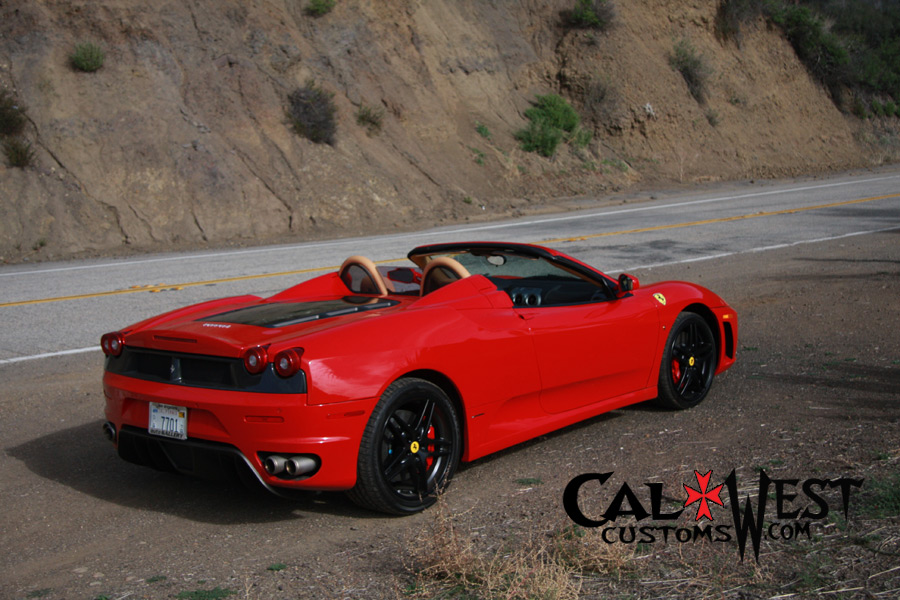
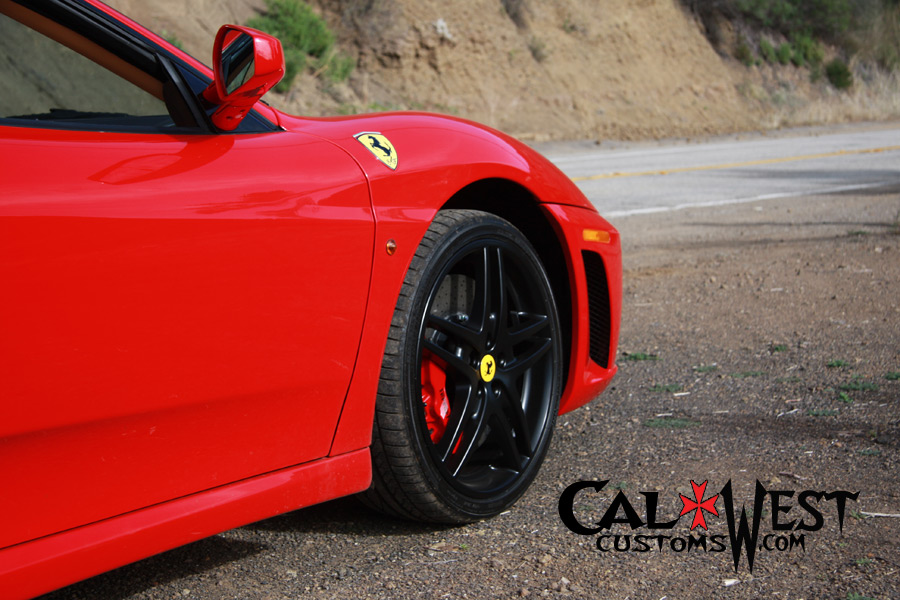
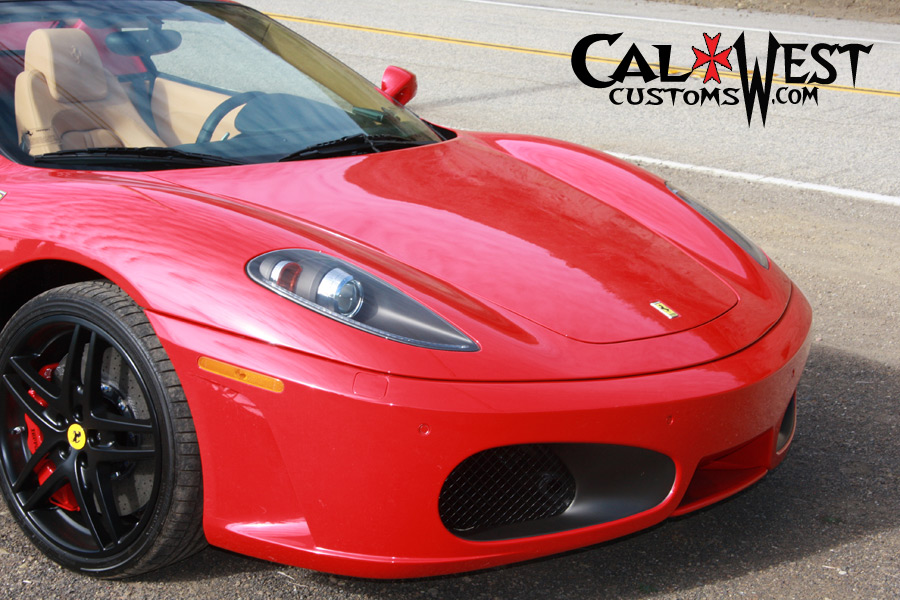
Design The body has been redesigned to be more curvaceous and aerodynamic. Although the drag coefficient remains the same, downforce has been greatly enhanced. A great deal of Ferrari heritage is found in the car: at the rear, the Enzo’s tail lights and interior vents have been added. The car’s name has been etched into the Testarossa-styled driver’s side mirror. The large oval openings in the front bumper are reminiscent of Ferrari racing models from the 60s, specifically the 156 “sharknose” Formula One car and 250 TR61 Le Mans cars of Phil Hill. Engine The F430 features a 4.3L V8 petrol engine derived from a shared Ferrari/Maserati design. This new power plant is a significant departure for the F430 line: the engines of all previous V8 Ferraris were descendants of the Dino racing program of the 1950s. This fifty year development cycle came to an end with the entirely new 4.3L, the architecture of which is expected to replace the Dino-derived V12 in most other Ferrari cars. The engine’s output specifications are: 490 PS (360 kW; 483 hp) at 8500 rpm and 465 N·m (343 lb·ft) of torque at 5250 rpm. The F430 has a top speed of 196 mph. Brakes The brakes on the F430 were designed in close collaboration with Brembo. The result has been a new cast-iron alloy for the discs. The new alloy includes molybdenum which has better heat dissipation performance. Another option Ferrari is providing are Carbon fibre-reinforced Silicon Carbide ceramic composite discs. Ceramics have much higher resistance to heat and brake fade than metals, the F430’s brakes offer not only good performance but also a longer lifespan. Ferrari claims the brakes will not fade even after 300-360 laps at their test track. Features The F430 includes the E-Diff, a computer-controlled limited slip differential a type of active differential which can vary the distribution of torque based on inputs such as steering angle and lateral acceleration. Other notable features include the first application of Ferrari’s manettino steering wheel-mounted control knob. Drivers can select from five different settings which modify the vehicle’s ESP system, “Skyhook” electronic suspension, transmission behavior, throttle response, and E-Diff. The feature is similar to Land Rover’s “Terrain Response” system. The Ferrari F430 was also released with exclusive Goodyear Eagle F1 GSD3 EMT tires, which have a striking V-shaped tread design, run-flat capability, and OneTRED technology. In the US the company requested an exemption from the airbag design requirements, which was eventually granted, allowing the car to continue to be sold in the US. The F430 Spider is the convertible version based on the coupé. The F430 Spider is Ferrari’s 21st road going convertible. The Spider is—just like the coupé—quite similar in looks to the Ferrari 360. The roof panel automatically folds away inside a space above the engine bay. The conversion from a closed top to an open-air convertible is a two-stage folding-action. After a short to and fro the entire top disappears into a closed storage area between the seating and the engine. The interior of the Spider is identical to that of the coupé. 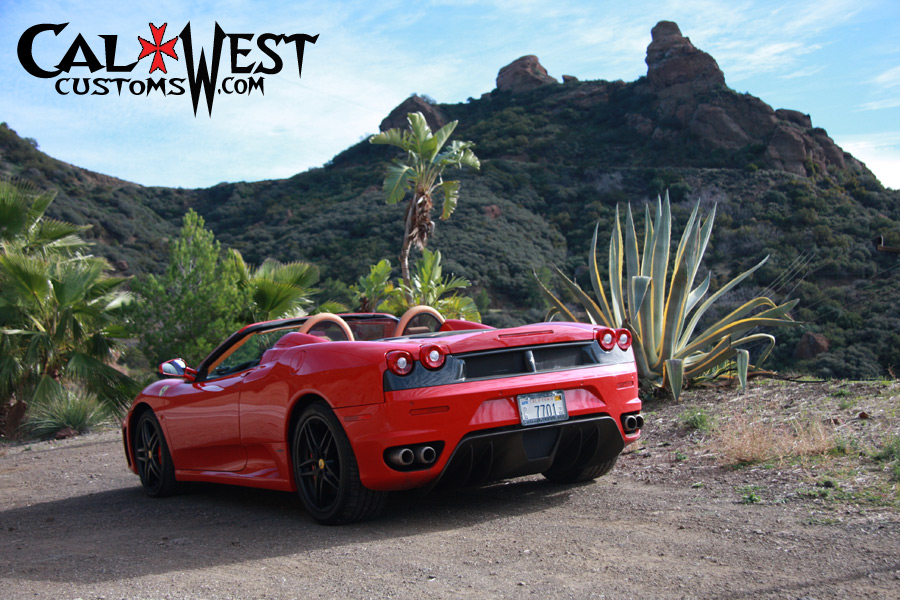
|